
 Illustrative image
Buy scaffolding frames & adjustable frames
Live stock from our inventory management system: 0 scaffolding parts in scaffolding frames in stock – second-hand and inspected, up to 70% cheaper than new items. Green = available immediately from stock, orange = available on request.
Parts order
Used parts from stocknur Lagerware · sofort lieferbar›
New parts from the CETRAC catalogueSPEED available to order now · MGS, MODUX from 2027 · DIBt approval applied for›
Order scaffolding parts – enter quantities, done
- 1 Select parts
- 2 Check preview
- 3 Send request
Illustrative image
Illustrative image
Illustrative image
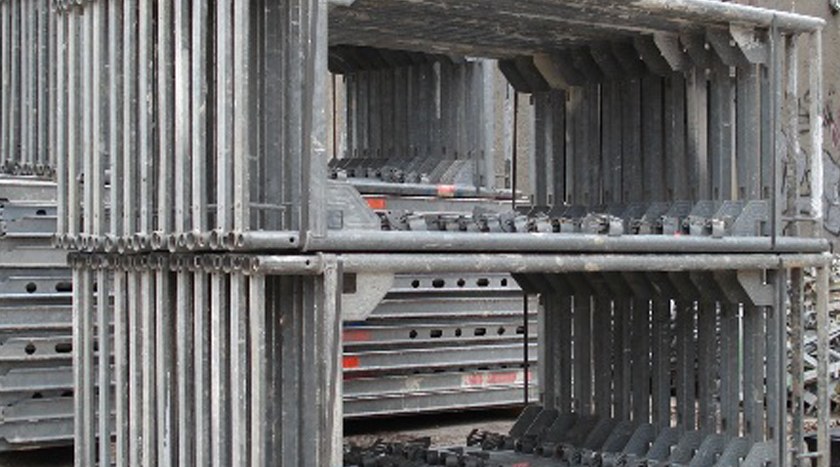
Scaffolding frames – often referred to as upright frames or vertical frames – form the load-bearing framework of a facade scaffolding. They define the height, width and system grid, and enable rapid, repeatable assembly with clearly defined connection points. They are the central component of any frame system.
Advantages of scaffolding frames
Quick assembly: Large components = fewer individual parts = less assembly work.
System precision: Clean geometry, clearly defined grids.
High repeatability: Ideal for large façade areas and standardised projects.
Stable structure: Fixed connection points for decking, guardrails and diagonal braces.
Efficient logistics: Stackable, easy to transport, low complexity.
An overview of all scaffolding frames:
Traditional frame scaffolding
Standard frames for façade structures.
- defined field widths
- Vertical framework for decking and guardrails
Vertical frames for modular scaffolding
System-specific vertical components for module nodes.
- fixed connection nodes
- ideal for more complex designs
Combination frames / Special frames
Frames for specific heights, widths or connection fittings.
- e.g. for transitions, low starting points or unusual façade configurations
Starting frames & extension frames
A box for adjusting the start and end heights.
- Adjustments to the top or bottom of the scaffolding
Accessories for frame sections
- Base plates / spindles
- locking pin
- Fasteners and securing components
Scaffolding frames in use: pros and cons
Scaffolding frames: Overview + comparison
Formwork frames (facade scaffolding)
- Maximum assembly speed
- Ideal for long, uninterrupted façades
- Less flexible when dealing with projections, angles and curves
- System-specific
Vertical frame (module-based)
- Very sturdy, ideal for industrial and specialised structures
- Compatible with module connectors
- Greater planning effort
- More parts than the frame
Special/combination frames
- Dealing with specialised building geometries
- In some cases, higher purchase costs
- Project-specific, less universal
Framework: Effort, Costs, Benefits
All scaffolding frames are available for immediate delivery:
Calculate scaffolding area
Are you putting your scaffolding together from individual parts? With our EasyFlow scaffolding area calculator, you can first work out the scaffolding area you need – so you’ll know exactly how many frames and other components you’ll require. It’s free, with no obligation, and takes just a few seconds.
FAQ – Scaffolding frames, adjustable frames & vertical frames
Fixed frames are traditional façade frames. Vertical frames form part of modular scaffolding systems and feature modular connectors for flexible connections.
Only on specifically authorised systems. As a general rule: system by system.
No. The dimensions are specific to each system. Standardised grids make assembly easier, but they vary depending on the manufacturer.
Only to a limited extent. Modular scaffolding components are advantageous when dealing with projections, curves and irregular structures.
Because a large component replaces several individual parts → less handling, fewer sources of error, faster assembly.